

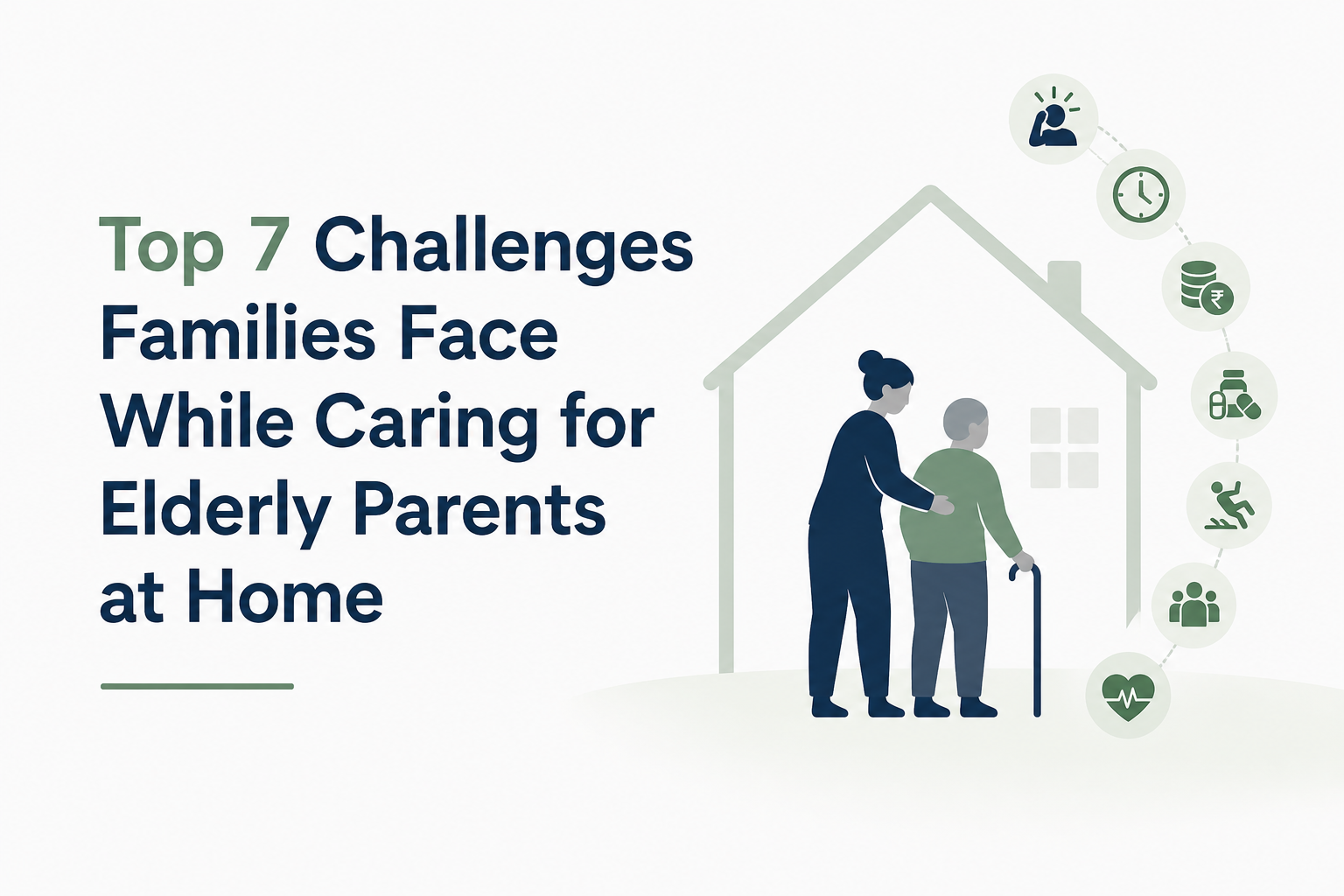

Taking care of your aging parents in your own home can be satisfying, but it is definitely a much more greater responsibility than you can think. There are many elderly parents caring challenges associated with taking care of elderly parents such as health care, safety issues, emotional needs, and other issues. Handling such elderly parents caring challenges in conjunction with work and personal commitments can be very challenging in the long run.
According to AARP studies, over 40% of family caregivers offer highly intensive care, whereas seven out of ten caregivers have employment. Understanding the main caregiving challenges will help families in preparing themselves and seeking help whenever required so that their aging parents receive the appropriate care and attention in their own homes.
Why More Families Are Taking Responsibility for Elderly Care at Home
A greater number of families like the idea of caring for elderly parents at home, as home is where seniors usually feel the most comfortable and secure. Most elderly people wish to stay in their homes where they are used to their habits, things, and family rather than moving to a care home.
One of the reasons why staying home is feasible nowadays is the development of home healthcare. Professionals can come in for nursing therapy, and equipment can be supplied without the person going to a care home full-time. Sometimes, aging at home with additional support is a great way to keep one’s independence.
Challenge 1: Balancing Work, Family, and Caregiving Responsibilities
Combining work commitments with personal life and caregiving tasks can be one of very big elderly parents caring challenges. It is difficult for most caregivers to cope with their job commitments and take care of their parents at the same time. This results in less productivity and emotional strain. If there is no organizational help in such cases, then families become stressed about handling everything together.
Challenge 2: Managing Medical Needs and Medications
Elderly people may need more than one prescription and medical attention. Prescription management, as well as medication dosage and scheduling, may be difficult to coordinate. Caregivers will have to see to it that the medications are being taken properly and on schedule. At the same time, they need to check for any adverse reactions from these medications.
Challenge 3: Handling Mobility and Safety Concerns
Walking difficulties, problems with balance, and joint pain make individuals much more prone to falling and injuries while staying at home. To guarantee more better safety precautions and necessity, caregivers most often need to eliminate any potential dangers, install all types of necessary equipment, and top of all supervise their patients when required. Even routine activities can be dangerous, and therefore, the patient requires continuous care and monitoring.
Challenge 4: Dealing with Emotional Stress and Caregiver Burnout
Taking care of other family members most often can have its own psychological implications on the mind of a caregiver. Being under a continuous stress and emotional pressure, not having any private time for oneself to properly heal their emotional health, and not to forget being concerned about the health of the parent can cause a greater number of stress and exhaustion. Many caregivers become exhausted trying to cater to both their physical and psychological needs.
Challenge 5: Addressing Loneliness and Social Isolation in Seniors
Loneliness can result from low social contact among elderly people living at home. This can occur as a result of a lack of mobility, retirement, or even due to the absence of peers. It is up to the caregiver to come up with strategies to engage the senior through socializing or even family contact.
Challenge 6: Managing Emergencies and Unexpected Health Issues
Medical emergencies may arise spontaneously and need prompt treatment. The caregivers should always be ready to deal with any case of a fall or illness that may come up unexpectedly. The absence of proper medical skills and assistance might complicate such situations and make their management difficult.
Challenge 7: Providing Consistent Care as Parents’ Needs Increase
As parents get older, the amount of help that they need becomes greater and greater over time. It might start out with just a little bit of help, but in the end, it might turn into round-the-clock help. This can be challenging for families to provide on their own without any extra help.
When Families Should Consider Professional Senior Care Support
- When daily care needs are hard to manage: It is only natural that as the elderly members of our family start to lose their strength and independence, caregivers within the family also struggle to keep up with the daily demands and elderly parents caring challenges, including helping with bathing, dressing, and meal preparation. Senior care professionals can provide continuous and safe living conditions to the elderly through reliably supporting their very basic day-to-day needs. Also not to forget that getting support in a timely manner can not only help to maintain the senior’s quality of life but also prevent the family members from over-exhausting themselves physically and emotionally.
- When medical needs become more complex: It is not a small matter if you have to look after your elderly parents, taking into account that they will have quite stubborn chronic conditions, require certain medications and physical therapy, plus attending regular doctor’s appointments. Plus the training and expertise, professional caregivers are also capable of keeping an eye on the health condition, helping with the medications, and even preventing the health from getting worse by detecting the issues at the very initial stage. Families get a sense of relief when they hire a professional caregiver, as they know that the health care needs of their loved ones will be taken care of in the best possible manner.
- When caregiver stress affects a parent’s well-being: Caring for a parent while living one’s own life can be taxing, both emotionally and physically. When the caregiver is a family member, this will also mean sacrificing their own needs for the elderly one. If a caregiver is worn out, troubled, sleepless, or finds it hard to struggle out other duties, it would be a good idea to look for professional help in caregiving. Family member involvement is still encouraged and supported through the care assistance provided at home, as is their quality of life, and in fact, all the aspects of their well-being can be maintained.
- When care requirements continue to increase: Health issues linked to aging usually escalate the need for care, and families may struggle to manage their expanding responsibilities alongside their work and family commitments. Assistance from professional caregivers for seniors is easily adjusted to changing needs and situations, so providing seniors with ongoing and steady care as their needs continue to evolve.
How Redle Care Assisted Living Helps Reduce Caregiving Challenges
Redle Care Assisted Living supports families in managing the increasing elderly care challenges that come with caring for aged members by introducing a secure, nurturing, and well-run home care for seniors. Instead of family members being responsible for every single time of the day, the elderly will be given support for their personal needs, the management of their medication, help to be able to move around, and assistance with simple tasks by the personnel.
They have a community that is geared towards eliminating the typical issues that arise from family caregiver challenges, like fatigue of the caregiver, worries about safety, social isolation, and readiness for emergencies. The elderly will have at their disposal scheduled daily activities, interactive social events, healthy meals, and even the possibility of reaching out to a medical professional when necessary. This contributes to the idea that the elderly can still have their pride and be independent while getting the support that is right for them.
To the families, Redle Care gives them a moment to relax as they will know that the elderly members are being looked after in a safe environment with regular monitoring and a kind-hearted approach to care. By entrusting the caregiving to knowledgeable individuals, the families can devote their time to having stress free work life balance as the parents get the best and most suitable support every day.
Conclusion
Taking care of our parents at home is a noble duty, but can be quite challenging emotionally, physically, and practically for the whole family. Once families come to know about these elderly parents caring challenges, they can also come up with solutions and get the right kind of help at the right time. Whether through other family members, professional caregivers, or sheltered homes, the availability of suitable resources can greatly enhance the happiness of both the elderly and their caregivers.
FAQs
What are the biggest challenges of caring for elderly parents at home?
Problems faced by family caregivers for caring for aging parents include meeting health requirements, providing safety, balancing responsibilities, avoiding loneliness, and coping with caregiver stress.
How can families avoid caregiver burnout?
There is scope for sharing of responsibilities, accessing respite care, taking care of one’s own health, and getting professional help if required.
When should professional senior care be considered?
When health needs, safety considerations, or demands for care become hard to cope with, professional care is recommended.
Is home care enough for elderly parents with increasing needs?
Home care may prove inadequate in the face of increasing care needs, thus necessitating the involvement of professionals or the use of assisted living facilities.
How does assisted living help families caring for aging parents?
The advantages of assisted living facilities are daily assistance, protection, socialization, and professional health care services, which eliminate the burden of family caregiving.