

At some point, food stops being about taste. It becomes something bigger. Health, comfort, well-being. For seniors, a good meal does more than fill you up. It becomes both nourishment and medicine, energy and comfort. That’s why meals in assisted living are so important when families look for the right senior care in India.
It’s common for adult children to worry about what their parents are eating. Are they getting protein? What about veggies? Are they sticking to their heart-healthy diets? Are they even enjoying their food? These are concerns. It’s not easy to keep up with them at home.
As people age, cooking gets tough. Standing at the stove, bending, lifting, and running to the store can be a struggle if you’re dealing with arthritis, weakness, or other health issues. Planning meals can feel like a burden. Often, seniors living alone skip meals, have packaged snacks, or settle for whatever’s easiest. This means their bodies miss the nutrients they need.
That’s where Assisted living with nutritious meals makes a difference.
In an assisted living community, nutrition is important. Food is prepared with seniors’ health in mind. It’s not just about nutrition. There’s comfort, familiarity, and a homemade touch. The best places focus on home-style meals. Balanced, comforting, and tailored for older adults.
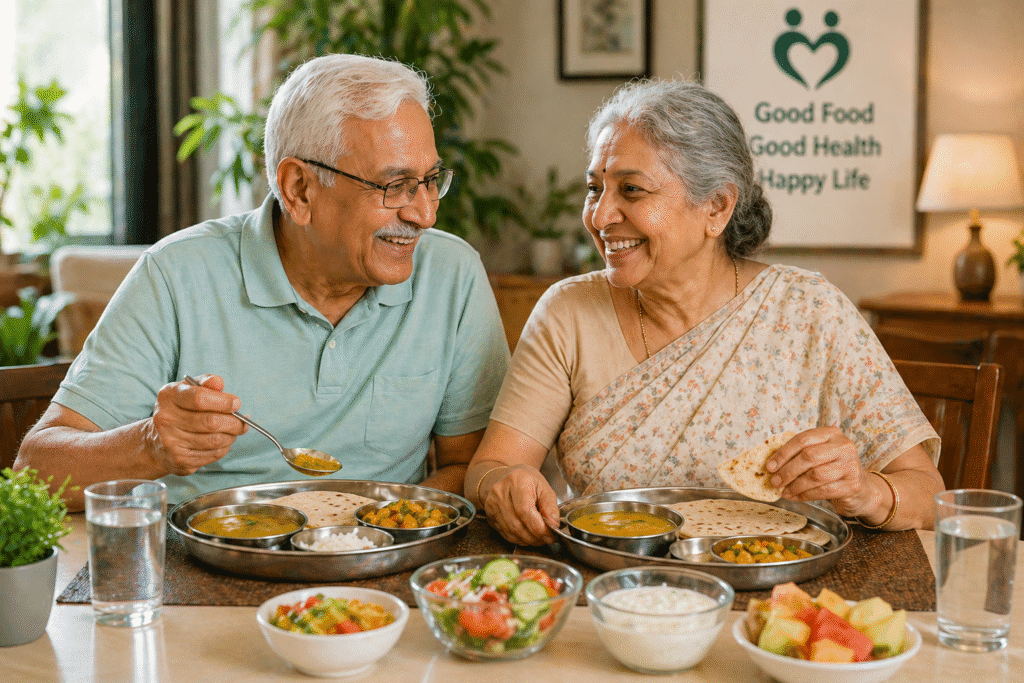
The quality of food in living is key. Nutritious meals keep people stronger, help prevent infections, protect bones, stabilize blood sugar, and can even lift spirits or sharpen the mind. Good food leads to a life.
Food is important in India. It’s more than nutrition. It’s routine, family, memory, and comfort. Think of a bowl of dal, soft chapatis, or soothing soups. For seniors, these aren’t just meals. They’re reminders of home and belonging. That’s why families seek care that offers true nourishment and comfort.
More families in India are realizing how senior nutrition matters. Assisted living is more than safety and healthcare. It’s about routine, dignity, and well-being. And often that starts with a home-cooked meal served with care.
Why Nutrition Is Essential for Seniors
For seniors who live at home, food is not about how it tastes or how easy it is to get. It is often a struggle. Simple things like planning what to eat or going to the store to buy food can feel very hard to do. A lot of adults skip meals or eat whatever is easiest, even if it is not good for their health.
Let’s be honest, aging changes a lot. The way food tastes and smells is not as strong as it used to be, so food does not excite seniors the way it used to. If seniors have teeth or sore gums, it can be hard to chew food. Sometimes it is hard to swallow food. Medications can affect how much seniors want to eat and how their bodies digest food, so seniors may not want to eat for a time. If it is hard for seniors to move around, it can be hard for them to even get to the kitchen.
Feeling lonely is a problem, too. When seniors live alone, they may not want to cook meals. Making a whole meal for one person can feel pointless. So some seniors just eat tea and biscuits or snacks that are packaged just to have something in their stomach. These foods do not have the nutrition that seniors need, especially since their metabolism is slower and their immune system is weaker.
Buying food is another challenge that seniors face. Carrying bags of food, picking out the right vegetables, and figuring out what food is healthy can be difficult, especially for seniors who have trouble seeing or remembering things. Sometimes seniors have a hard time getting to the store or have health problems that make it impossible to leave their homes. As a result, seniors often buy food that is processed, canned, or instant, which is quick but not always healthy.
Cooking food can be dangerous for seniors. Small kitchens and slippery floors can cause accidents. If seniors have arthritis, tremors, or a poor grip, it can be dangerous for them to handle knives and hot pans. For some seniors, standing for a time is exhausting, so even simple tasks like chopping or stirring can be hard to do.
Many seniors have to deal with health problems. Seniors with diabetes, high blood pressure, kidney problems, or heart problems often have to follow a diet, which can mean giving up foods they like. Figuring out what food is safe to eat can be confusing. Sometimes, the people caring for seniors do not have the right information. So meals can become boring and repetitive, which takes away the joy of eating.
Forgetting dehydration is easy. It is very important. A lot of seniors simply forget to drink water, either because they do not feel thirsty or because it is hard for them to move around. Signs of dehydration, such as dry mouth, dizziness, and dark urine, can appear slowly until serious health problems start.
Some families try to help seniors. Busy schedules and misunderstandings about what seniors need to eat can make things worse. Meals can be rushed, skipped, or replaced with food that’s not healthy. Over time, seniors may lose weight, get sick often, have mood swings, and have less energy to move around. What seems like boredom with food or laziness is sometimes the body’s way of warning that something is not right.
Helping seniors with these food challenges does not have to be difficult. Sometimes small changes, like preparing meals on time, choosing food that is soft, or keeping healthy snacks nearby, can make a big difference. Encouraging seniors to eat with others, reminding them to drink water, and changing recipes to fit their health needs can really improve their daily lives.
In the end, overcoming these challenges starts with paying attention, listening, and making meals feel easy, fun, and safe for seniors. When seniors feel supported, eating can change from a chore to a source of comfort and wellness.
Common Food Challenges Faced by Seniors at Home
For families having elderly parents at home just feels like the right thing to do. Home is where you have a lot of memories, and it is a place that makes you comfortable. Ensuring older parents eat well every day is not easy. Even if you want to help them, it can be difficult to make sure they have meals.
That is why a lot of people in India are talking about assisted living with nutritious meals. This is not a new idea. This is what people really need.
One major problem for parents who live at home is that they do not feel like eating. As people get older, their appetite changes. Foods that they used to love do not taste good to them anymore. Some elderly parents eat little food, and others skip meals altogether. When you live alone, it does not seem worth it to prepare a meal just for yourself. After a while, elderly parents start to lose their nutrition without realizing it.
- Cooking can also be very difficult for parents.
Simple tasks like washing vegetables, making dough, or standing in front of the stove used to be easy. Now, because of arthritis, back pain, weakness, and trouble with balance or vision, cooking can be very difficult. Sometimes it is even dangerous. When this happens, elderly parents often choose to eat foods instead of healthy ones. They eat biscuits, instant noodles, and packaged snacks. They eat the same meals over and over because they are easy to make.
- Health problems make things more complicated for elderly parents.
If an elderly parent has diabetes, they need to watch how much they eat and avoid certain foods. If they have hypertension, they must eat less salt. If they have kidney problems, they need to limit how much protein they eat. If they have trouble digesting food, they need to eat foods that are easy to digest. If they have trouble chewing, there are more limits on what they can eat. Some medications can also make food taste bad. Make elderly parents lose their appetite. It is very hard for families to make sure their elderly parents are eating a healthy diet, especially when everyone is busy with their own things.
- Meal timing
Elderly parents need to eat meals to have energy and make sure their medications work properly. In a busy household, meals can be late or rushed. This can make elderly parents tired. It can also cause problems with digestion and blood sugar control.
- People often forget that eating can be a thing for elderly parents.
Food is meant to be shared with others in Indian families. Eating alone every day can make elderly parents lose their appetite. They cook less, eat less, and eventually lose interest in food altogether. How elderly parents feel and their nutrition are connected. That is why it is good for elderly parents to eat home-style meals in a communal space. When meals are shared with others, elderly parents eat better. They enjoy their food again.
- Families often struggle to provide meals for their elderly parents.
Some weeks, meals are healthy and balanced. Weeks, everyone is too busy, and convenient foods become the norm. For parents, consistency is important. Their bodies need nourishment, and skipping meals can be harmful.
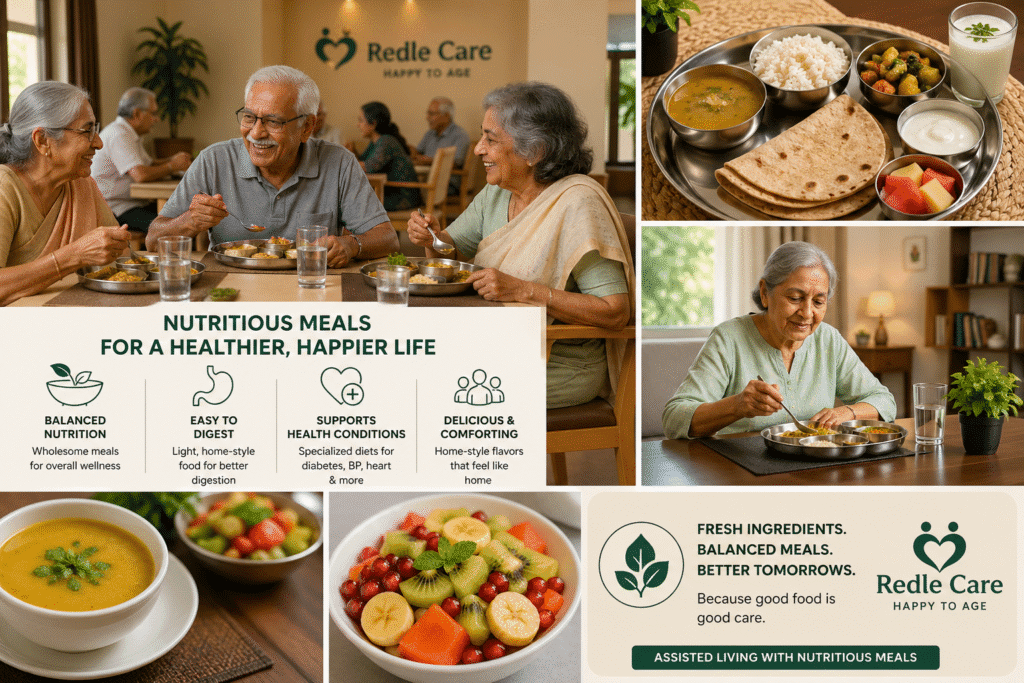
Places like Redle Care try to solve these problems. They plan meals, serve them on time, and pay attention to parents’ health needs. They provide food that’s familiar and comforting. This makes eating less of a concern for families. It is something that every elderly parent deserves.
What Makes a Good Meal Plan for Seniors
What really works for seniors when it comes to meal planning is not about throwing some vegetables into a meal, cutting back on sugar, or making some light food. There is more to it. Diet plan for elderly in India needs to have a balance of food, be easy to digest, and be made for each person’s specific medical needs. It needs to taste good so people want to eat it. It is not about putting food on a plate. It is about giving seniors the food they need to feel strong, comfortable, and full of life for a long time.
This is what makes meal plans so important for seniors.
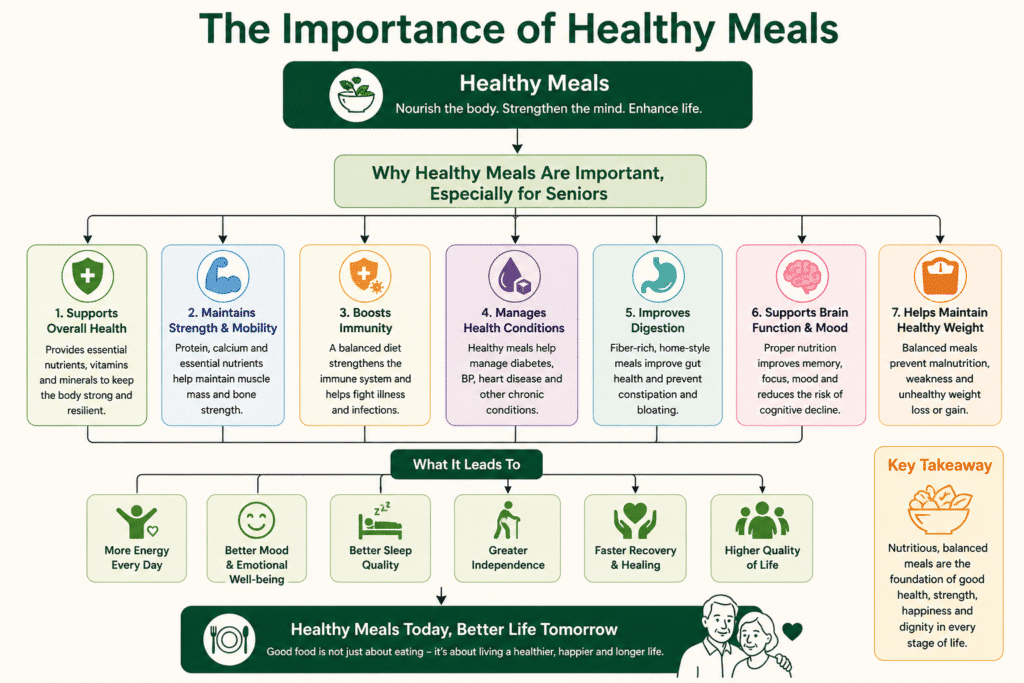
First, seniors need food that has a balance of Nutrition. As people age, their muscles weaken, so they need a lot of protein. Foods like dal, paneer, curd, lentils, eggs, fish, chicken, tofu, and legumes help keep muscles strong. Seniors also need fiber, which is found in vegetables, fruits, oats, millets, and whole grains. This helps them digest their food and prevents constipation, which is a common problem for seniors.
Seniors also need calcium and vitamin D to keep their bones strong and iron to prevent fatigue and weakness. They should not eat too much oil, sugar, salty snacks, or processed food because these can make chronic health problems worse.
It is also important that seniors have food that’s easy to digest. They need food that’s gentle on their stomach, not boring, but comfortable. Heavy or spicy food can cause bloating or acidity. It is better to eat soft rotis, well-cooked rice, dal, sautéed vegetables, soups, khichdi, curd-based dishes, steamed foods, porridge, and fresh fruits. Home-style meals are great for seniors because they are familiar and easy to digest.
Each person’s health is different, so they need a meal plan that is made for them. Some seniors may need a meal plan that’s good for people with diabetes, while others may need a plan that is low in salt. Some may need protein while others may need softer textures. Some seniors may want to eat meals throughout the day rather than three big meals. The best meal plans are those that can be changed to meet each person’s needs.
Variety is also important. Eating the food every day can be boring, so seniors need to have a mix of different foods. They like to eat foods that are in season, and they like to have their favorite foods. Having a rotating menu with regional cuisines, fresh fruits, soups, and comfort foods can make mealtime something to look forward to.
Benefits of Home-Style Meals in Assisted Living
Let’s talk about why Home-style meals for seniors make a difference in assisted living:
- Better Nutrition Every Day
When meals are fresh and well-balanced, seniors get the protein, fiber, and nutrients their bodies need. Good food that keeps them strong.
- Improved Digestion
Simple dishes that are lightly cooked help cut down on bloating and other digestive issues.
- Supports Medical Needs
Customizing menus for things like diabetes or high blood pressure means meals work with medications and medical conditions.
- Easy-to-Follow Routines
Setting meal times helps with everything from keeping up appetites to making sure medications are taken when they should be.
- Comforts the Soul
Favorite comfort foods bring back the feeling of home. Foods like dal-rice, soft rotis, warm khichdi, or idlis. This kind of comfort matters.
- Prevents Malnutrition
Regular meals mean skipped meals and less unhealthy snacking.
- Stays Hydrated
In addition to water, soups, buttermilk, coconut water, and lemon water help keep fluid levels up.
- Mealtimes Get Social
Eating together makes food more enjoyable. Encourages seniors to eat better.
- Less Stress for Families
Knowing loved ones have quality meals and care each day helps everyone relax a bit more.
The quality of food in assisted living sets the tone for a senior’s quality of life.
How Assisted Living Ensures Proper Nutrition
How do assisted living communities make sure this happens? Good communities do not leave nutrition to chance. They have a system. Planned meals, reliable timing, and a focus on health.
Here’s how they do it:
- Planned by Experts
Menus are built around what seniors need in their diets.
- Menus Tailored to Health Problems
There are options for managing diabetes, reducing sodium, supporting the heart, offering textured meals, and more.
- Fresh Ingredients
Meals are packed with vegetables, good fruits, and fresh staples. Never leftovers.
- Balanced throughout the Day
A usual day brings breakfast, a healthy snack, a full lunch, afternoon tea and snacks, a lighter dinner, and sometimes a warm drink at night.
- Right-Sized Portions
Meals are not too big or too small. Just what is appropriate.
- Hydration Is Watched
Staff encourages water and other fluids all day.
- Good Food, Not Bland Food
Healthy food does not mean food. The meals are simple. Cooked with flavor and care.
- They Pay Attention
Changes in appetite or weight do not go unnoticed. There is always someone checking in.
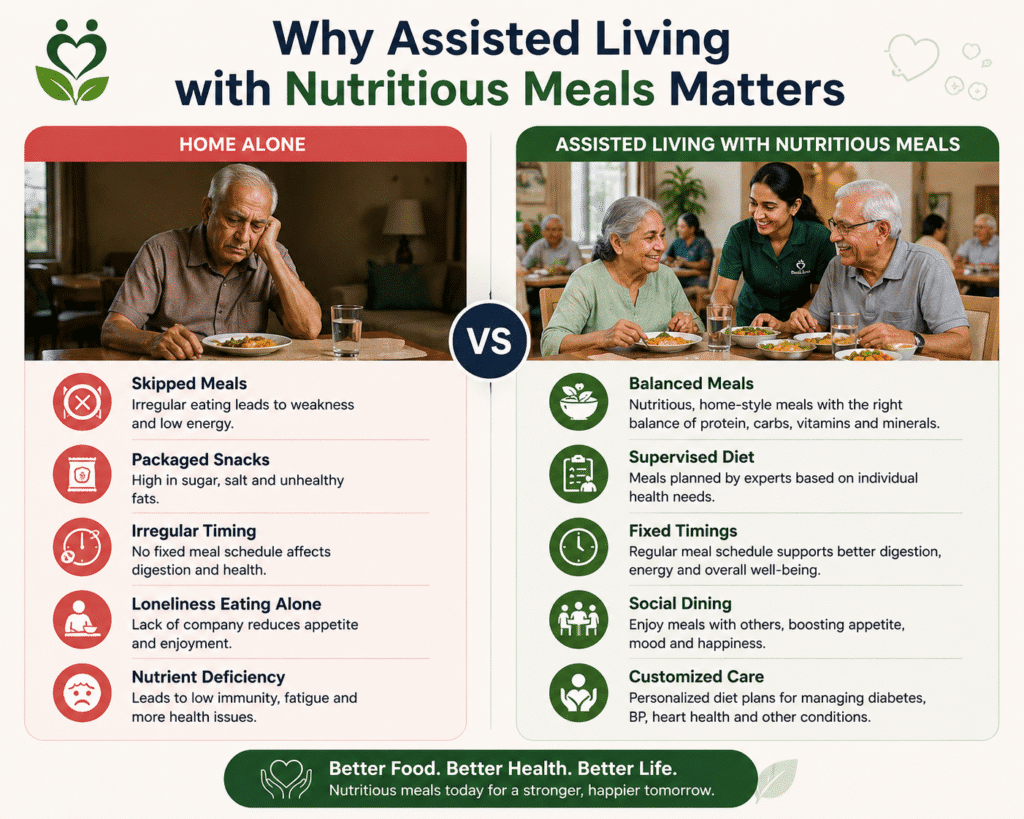
With a setup like this, nutrition in living is not hit-or-miss. It is built into the routine.
How Redle Care Provides Nutritious, Home-Style Meals
Now let’s talk about Redle Care. They take food seriously. Not as a chore. As a true pillar of wellness. Their approach covers everything:
- Cooking fresh every day
- Tastes and textures that feel like home
- nutrition at every meal
- Easy-to-eat foods for all kinds of needs
- Special menus for health issues
- On-time schedules
- Ingredients that change with the seasons
- Clean kitchens and proper hygiene
- Encouragement for drinking water
- A dining setup that feels friendly and warm
For families looking for healthy meals for their elderly loved ones, these details mean a lot. Among all the choices for Assisted living Chennai food facilities, Redle Care stands out. They blend taste, nutrition, and comfort without cutting corners.
Conclusion
Choosing Assisted living with nutritious meals is about choosing a better everyday life for aging loved ones. And everyday life is deeply shaped by what seniors eat.
The right food can:
- build strength
- improve immunity
- support medication routines
- improve digestion
- boost mood
- maintain independence
- increase comfort
- improve overall quality of life
That is why assisted living with nutritious meals is no longer just a convenience; it has become an essential pillar of quality senior care.
When assisted living offers balanced nutrition, thoughtful meal planning, and comforting home-style meals for seniors, it creates a living experience where seniors are not just cared for, they are truly nourished.
And often, that nourishment becomes the quiet foundation of healthier, happier aging.
FAQs
What type of food is provided in assisted living facilities?
Elderly care with food services serves meals with grains, proteins, lots of vegetables and fruit, dairy, and easy-to-eat snacks. Home-style dishes are common because they feel familiar and comforting.
Are meals in assisted living customized for health conditions?
Yes, they are. There are options for diabetes, low sodium, soft foods, heart health, or high-protein diets. Tailored to each person’s requirements.
Why is nutrition important for seniors?
It keeps their immune system strong, healthy, and bones solid, helps with digestion, improves energy, and keeps them hydrated and alert.
Do assisted living homes provide home-style meals?
Good ones do. They focus on fresh home-style cooking, not institutional fare.
How do assisted living facilities ensure proper diet for seniors?
By planning menus using fresh ingredients, customizing for health needs, keeping meal times, monitoring hydration, and keeping an eye on appetite and health. Senior nutrition care India has become essential in modern assisted living.