

The CDC reports that more than 14 million adults aged 65 years or older experience accidents annually in the U.S., out of which at least 37% of these accidents lead to major emergency injuries that make it necessary for some form of health care services or limit one’s regular activities.
These statistics show how important it is to make one’s home safety for elderly modified. A carefully designed checklist for home safety for elderly can minimize accidents and promote greater independence.
Why Home Safety Is Essential for Aging Parents
The necessity of having a secure place to live is important when it comes to caring for elderly parents due to the fact that age leads to a lack of mobility and vision and balance issues, which means that the risk of falling increases.
There are certain home safety for elderly changes that could help to reduce the risks of injuries, such as removing any obstacles from floors which could cause accidents and installing assistive rails for seniors’ balance.
A secure environment at home offers major comfort and relief to senior citizens and their families, resulting from a very low incidence level of falls or other mishap events.
The seniors, for instance, feel empowered about their activities of daily living with a sense of satisfaction. Taking home safety for elderly as a top priority can help in preventing injuries, and at the same time, it will promote and ensure the comfort of an elderly person’s living condition by supporting independent life while encouraging overall wellbeing of physical and mental health.
Common Safety Risks Seniors Face at Home
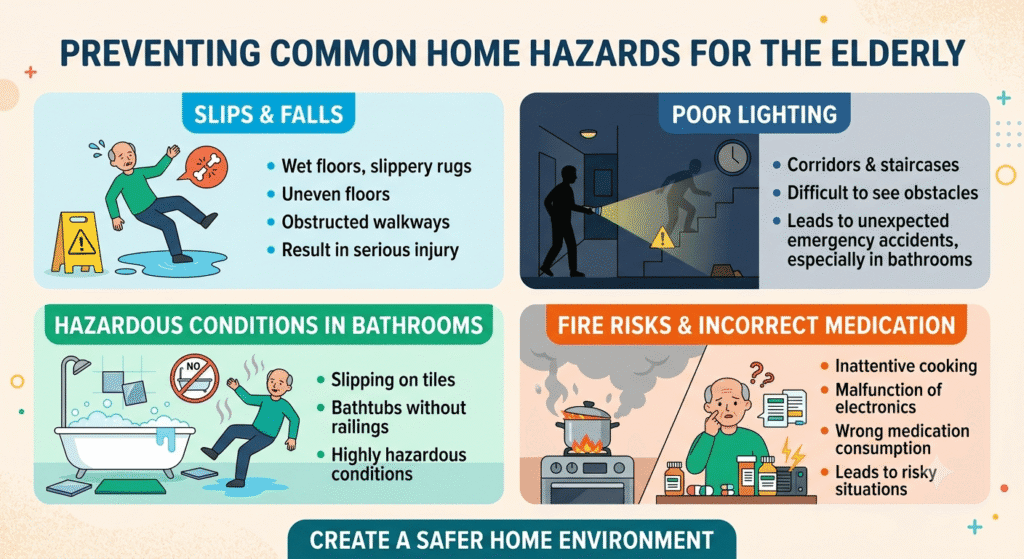
Changes in age-related mobility, vision, and balance frequently pose increased hazards for everyday household objects and features. Understanding these potential risk factors allows families to better adjust to a more safer living environment for their aging parents.
- Slips and Falls: Wet floors, slippery rugs, uneven floors and obstructed walkways are just a few factors that can result in slipping and serious injury.
- Poor Lighting: Poor lighting in the corridor’s, staircase and bathroom can be a big trouble for elderly people. They can find it very difficult to find any obstacles which might be on their way which can cause unexpected emergency accidents.
- Hazardous Conditions in Bathrooms: Slipping on tiles and using bathrooms that have bathtubs that lack railings are highly hazardous conditions for the elderly.
- Fire Risks and Incorrect Medication Consumption: Inattentive cooking, malfunction of electronic equipment, and wrong medication consumption lead to risky situations.
Tackling these safety concerns will allow seniors to stay independent while lowering the risk of any accidents that may happen at home.
Room-by-Room Home Safety Checklist for Seniors
A home that is safe is built one step at a time, and one of the first things to do is look out for possible dangers in each room.
A simple but effective way of making your house a safer place for the elderly is to go with a home safety checklist for seniors:
| Area | Home Safety Checklist |
| Entrance & Hallways | Keep walkways clutter-free, install bright lighting, secure handrails, and remove loose mats or uneven surfaces. |
| Living Room | Remove loose rugs, organise electrical cords, ensure stable furniture, and provide easy access to frequently used items. |
| Kitchen | Store commonly used items within reach, clean spills immediately, use non-slip mats, and check smoke detectors regularly. |
| Bathroom | Install grab bars, use non-slip bath mats, raise toilet seats if needed, and ensure adequate lighting. |
| Bedroom | Place a lamp within easy reach, keep pathways clear, use a supportive bed, and keep emergency contacts nearby. |
| Stairways | Install sturdy handrails on both sides, improve lighting, add non-slip treads, and keep stairs free of clutter. |
| Outdoor Areas | Repair uneven pathways, remove obstacles, improve exterior lighting, and install handrails where necessary. |
Home inspections for safety purposes will reduce the chances of accidents, promote greater independence, and foster a better living environment for aging parents.
How to Prevent Falls and Accidents at Home
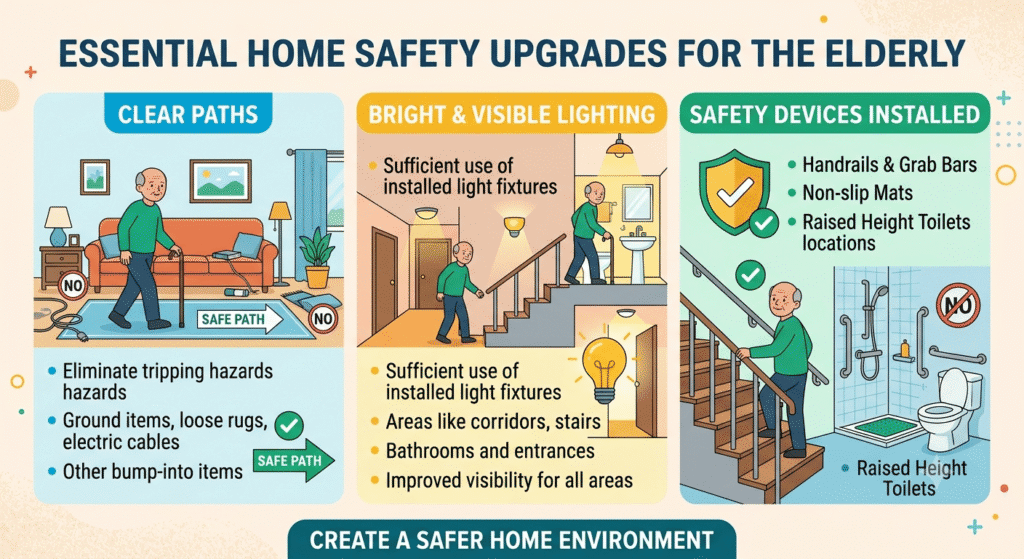
Falls and other accidents can easily be avoided through some senior home safety tips and maintenance at home. Simple adjustments can make a huge difference to the safety and security of your loved one.
- Clear Paths: Eliminate tripping hazards like items on the ground, loose rugs, electric cables, and other items that you can bump into.
- Lighting: Make sufficient use of the light fixtures installed in the place for visibility in areas like corridors, stairs , bathroom, and entrance.
- Safety Devices: Put up handrails, grab bars, non-slip mats, and toilets of higher height in these locations.
Implementing such safety measures guarantees that the seniors will retain their independence while being protected from accidental emergency incidents.
Essential Home Modifications for Elderly Parents
Small adjustments to the house can greatly enhance the safety and independence of aging parents without increasing the chances of injuries and accidents.
Put up Grab Bars and Handrails
The use of firm grab bars in the bathroom as well as the fixing of handrails in staircases and hallways is highly recommended.
These two features not only enhance one’s confidence while moving around but also greatly reduce the chances of slipping and losing balance.
Fix Lighting Problems and Increase Accessibility.
Add bright light sources to entrances, hallways, staircases, and those frequently used rooms. Change high shelves that are hard to climb to ones of easy reach and remove the objects which could be hindrances.
This would make it easier for seniors to move around securely and do their daily tasks by themselves. The changes made in this way improve the safety of the household setting and increase the sense of self-confidence of aging parents for maintaining their independence.
Smart Devices and Technology That Improve Senior Safety
The use of modern technology has ensured that seniors can lead safer and more independent lives.
Through effective monitoring and provision of emergency services and overall increased convenience in their daily activities.
Medical Alert Systems
With the use of medical alert devices, seniors can call in for help in an emergency situation just by pressing a button.
Features of many such devices are fall detection, GPS location tracing, and 24/7 monitoring that help not only to provide immediate emergency response but also give families major relief from worry for their loved ones.
Smart Home Safety Devices
Devices like smart smoke alarms, video doorbells, motion sensors, and smart lighting all contribute to home safety and minimize the risk of accidents.
They increase a senior’s situational awareness, provide more light, and assist them in navigating their house at safe levels.
Medication and Health Monitoring Tools
Wearable monitoring devices and medication reminders are useful in the management of medical conditions and helps to avoid missed medication schedules.
These digital solutions also promote self-reliance and better health through enhanced monitoring capabilities.
The role of smart technology is crucial in terms of improving safety and elderly care at home, promoting independence, and providing families with an increased sense of security for their family members in the house.
When Home Safety Measures Are No Longer Enough
Home modifications and safety devices can help to reduce the everyday risks and ensure senior safety at home, but as a senior develops more complex health care needs, they may not be a sufficient solution.
Falls happening all the time, loss of memory, mobility issues, or even difficulty managing one’s everyday life can all mean it is time for professional help. Getting the extra level of care at the right moment ensures safety, well-being and overall comfort of the senior.
How Redle Care Provides a Safe and Secure Living Environment for Seniors
Redle Care provides a secure home for senior citizens where safety and privacy is the number one priority. The homes are well-equipped with professional caregivers and nurses providing round-the-clock care.
In addition to medication administration, emergency equipment, and regular meals, senior citizens get access to living spaces according to their convenience. Personalized senior care provided by Redle Care gives seniors independence and security in life, which in turn ensures the peace of mind of their family members.
Conclusion
One of the best ways to safeguard the elderly is simply to create a safe at-home environment that also allows for their independence as much as possible.
Families can lower the danger of falling and injury and at the same time help to make life more secure on a daily basis, by making safe adjustments and home modifications for elderly parents with safety devices.
Regular safety home safety for elderly checks and having an understanding of how much support can actually be provided would be the easiest way to ensure that the elders can continue living their lives while being assured of their safety and being in complete charge of their daily activities.
FAQs
1. How can I make my home safer for elderly parents?
To make your elderly parents’ more safer at home, consider removing potential hazards like something that might make them fall, lighting the house from every corner well, providing support by installing grab bars and handrails, using non-slip mats, and putting the regular things you use at their hand level.
2. What are the most common home hazards for seniors?
Loose rugs, slippery floors, poor lighting, cluttered walkways, unsafe bathrooms, damaged stairs, and unattended appliances all raise the chances of an accident to happen at home.
3. How can falls be prevented at home for older adults?
Start elderly home safety modifications by keeping each and every corridor clutter-free, put handrails, increase the amount of light in the areas; wear non-slip footwears and get a regular exercise that works on balance and mobility.
4. What home modifications are recommended for elderly parents?
Make sure to place grab bars; handrails; brighter lighting; non-slip flooring; using shower chairs; raised toilet seats and accessible storage as your top priority home modification for fall prevention at home for elderly.
5. When should families consider assisted living instead of home care?
Family members can think of placing the elder in an assisted living facility when the elderly person’s independence is no longer possible due to decreased home safety, or they are unable to take care of their daily activities, or the need for round-the-clock professional supervision and customised assistance becomes important.
Recommended Readings:
- Questions to Ask with Assisted Living Facility Before Making a Decision
- How Assisted Living Supports Better Sleep and Daily Routines
- Benefits of 24/7 Caregiver Support in Assisted Living Communities
- Senior Rehabilitation Services in Assisted Living: What Families Should Know
- Assisted Living for Couples: Can Elderly Spouses Stay Together?