

Caring for elderly parents is indeed a wonderful experience, but being always subjected to the pressures of physical, emotional, and mental exertion is too much for anyone.
It is important that you understand the early signs of caregiver burnout symptoms and its long term side effects to take care of yourself and also to ensure that older individuals receive good care without compromising your healthcare needs.
What Is Caregiver Burnout?
Caregiver burnout is the condition where a caregiver goes through very deep exhaustion due to the care they provide is a very heavy one both emotionally and physically.
Such Caregiver fatigue burnout can often result from the situation where someone is the only one providing care for another without gaining any reciprocation.
Over time, the fatigue of the body and mind causes side effects like stress and anxiety, a change in mood which is not readily treated, and an all-time lack of energy.
Common Signs of Caregiver Burnout Families Should Never Ignore
Most of the time, caregiver burnout comes slowly and that’s why the signs of caregiver burnout are usually not recognized until it’s too late and the caregiver starts to show the side effects.
Once you are able to recognize the first signs of caregiver burnout, your entire family may get the required kind of support of senior care for families much earlier, when levels of stress can still be controlled, thereby preventing both the decline in the health of your loved one as well as yours.
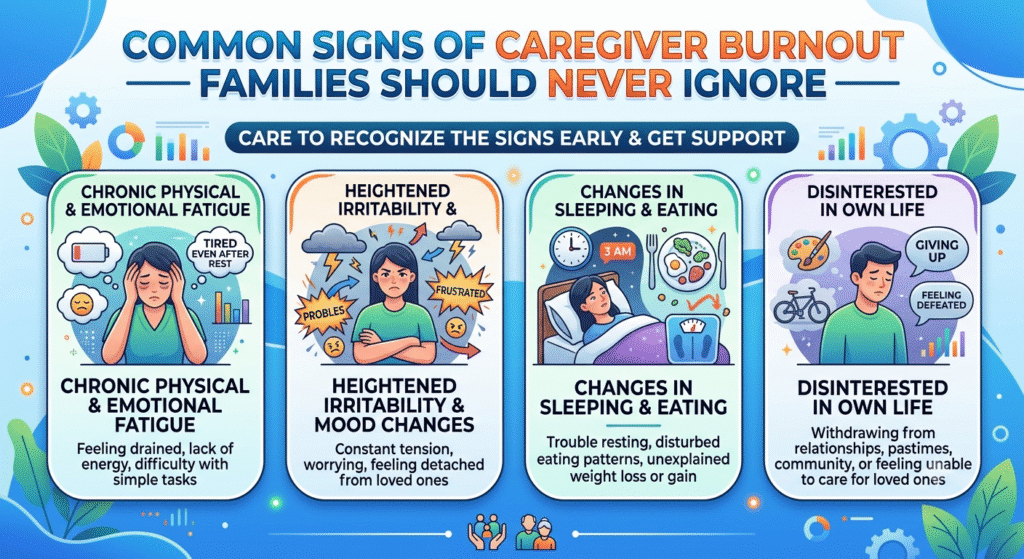
- Chronic physical and emotional fatigue: A sensation of tiredness or fatigue even after rest, lack of energy, or difficulty performing simple tasks.
- Heightened irritability or changes in mood: Being constantly fed-up, worrying, or feeling detached from the people one loves.
- Changes in sleeping and eating: Having difficulty getting enough rest, disturbed eating, or weight gain/loss due to constant stress, without any logical explanation.
- Disinterested in own life: Giving up on relationships pastimes community interactions when one is burdened, feels defeated, or unable to take care of the person they are caring for.
Recognizing these warning signs early on enables family members to take immediate action and help in keeping the caregiver healthy as well as taking proper care of their loved one.
Why Caring for Elderly Parents Can Become Overwhelming
Taking care of aging parents can be both fulfilling and difficult. With increasing care needs, family caregivers find it hard to cope without sufficient help.
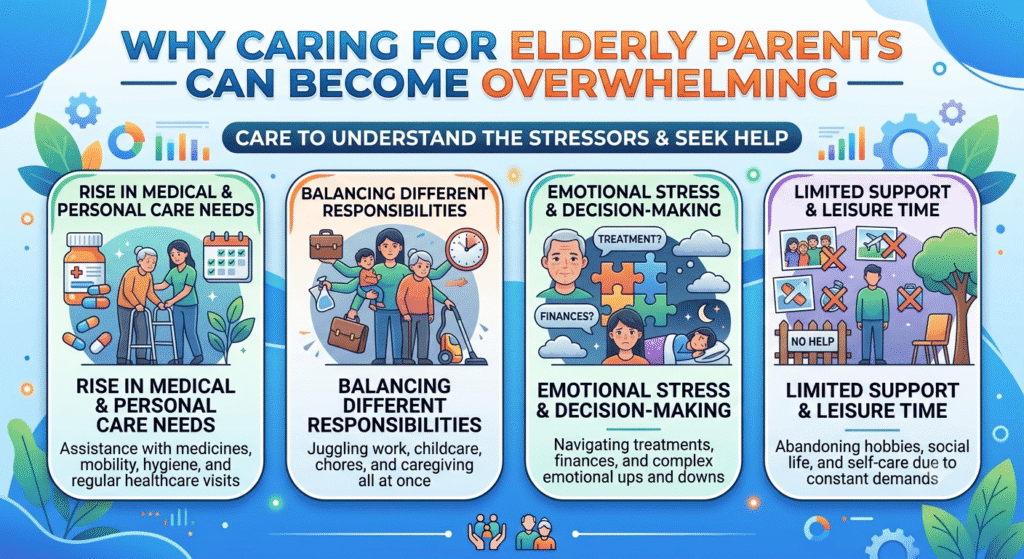
1. Rise in Medical and Personal Care Needs
With age, parents may need assistance in taking medicines, maintaining mobility, maintaining hygiene, and attending to healthcare needs regularly.
This is quite a demanding routine and calls for enormous efforts; because of this, a caregiver can experience a lot of difficulty.
2. Balancing Different Responsibilities
Many caregivers find themselves managing work, taking care of kids, doing their chores at home, and looking after their aging parents all at once.
Trying to balance such conflicting demands means that not much time is left for relaxation and even self-care.
3. Emotional Stress and Decision-Making
Taking care of a sickly parent is naturally upsetting. Caregivers are constantly struggling with emotional ups and downs as they are in charge of making decisions about medical treatments, financial matters, etc.
These feelings can cause one to lose sleep and become emotionally depressed.
4. Limited Support and Leisure Time
When you don’t have any kind of help from your relatives or professional caregivers, the pressure can become too much to tolerate. Besides that, most caregivers abandon self care, social life, and even their hobbies to cope with the demands of daily care.
Due to such a lack of personal time and support, stress increases dramatically without even realising. Not only is one’s daily productivity reduced, but the quality of life in total is also impacted.
A proper awareness about these challenges will enable families to understand when extra support will be required in order to keep the caregivers and their elderly relatives safe.
The Physical, Emotional, and Mental Impact of Caregiver Burnout
Caregiver burnout will not only affect the whole well-being of a person but it can also result in deterioration of the quality of care given to your elderly loved one.
The physical signs of caregiver burnout often include feeling tired and weary most of the time, experiencing frequent headaches, muscle pain, weakened immune system and sleep deprivation.
In most cases, caregivers completely forget to maintain their health by not only neglecting exercising and eating properly but also forgetting regular medical check-ups.
They have to take charge of the care of another person, so most of their time and energy go toward fulfilling that responsibility rather than looking after themselves.
From an emotional standpoint, burnout can give rise to feelings of sadness, frustration , guilt, helplessness, and loneliness. Those taking care of their loved ones often feel like no matter how hard they try, they are never able to reach that certain point in time where they think, “Okay, I’ve done enough now for the person.”
With the caregivers spending such a large fraction of their time helping out their loved one, it could happen that the person feels like they themselves are not doing enough, which in turn might give them feelings of guilt and loneliness.
In addition to the physical aspect, the psychological aspects are also equally important. Constant stress can mean various psychological disorders, e.g. anxiety and depression.
This also results in decreased concentration, the loss of memory, plus the inability to make important decisions. If there is no adequate assistance, this mental fatigue may start affecting one’s self-esteem, work efficiency and health condition as a whole.
Recognising these physical, emotional, and mental effects early is very much essential. Seeking help from family members, healthcare professionals, or respite care services can reduce stress, improve the caregiver’s health, and ensure elderly parents continue receiving compassionate, high-quality care without compromising the caregivers health.
Practical Ways to Prevent Caregiver Burnout
Caregiver burnout prevention begins with taking care of yourself first. Little steps done consistently will help to lower stress levels and increase resilience dramatically:
- Divide tasks: Ask your husband or wife, your children’s, your neighbor, or a home care provider to help you with caregiving so that your responsibilities do not get too big for you to handle all alone.
- Care for Yourself: Have healthy meals, be physically active, sleep properly, and attend your own medical appointments.
- Enjoy Yourself: Visit a respite care center or arrange for a day or two to spend alone with yourself.
- Chat with someone: Speak to your partner, son or daughter, friends, or join caregiver groups to share experiences, receive support, and also so that you don’t feel alone and isolated.
- Contact professionals: If you feel that the level of caregiving is too heavy and is becoming a serious issue day by day for you, then it may be time to consider using a senior care facility that offers professional help.
Proactive measures ensure that caregivers remain healthy, minimize stress levels, and offer compassionate care without compromising their own health.
When It’s Time to Seek Professional Senior Care Support
Being able to identify the signs of caregiver burnout and when you need professional help will not only save yourself but also the elderly from major healthcare issues.
Timely help will make sure that the elder receives safe and effective care.
- The Nature of the Care Has Increased: The elderly with mobility issues, those who forget their medication, those with dementia, and those needing personal help are better off with the help of professional caregivers.
- Everyday Tasks Are Too Demanding, And You Are In Need Of A Break: With professional caregiving and assistance, your tasks of working, handling the family, and caring for the person you love can all be done with much less effort.
- Safety Is Of Great Concern: If there were incidents such as accidental falls, running away, medicines taken incorrectly, or even a serious emergency that showed you needed a more capable professional assistance team, it is a big sign that you need to seek professional support.
Professional senior care helps the caregivers, improves the quality of life of the seniors, and gives reassurance to the whole family.
How Redle Care Helps Reduce Caregiver Stress Through Assisted Living
Redle Care is known to offer supportive assisted living services that help to reduce the stress for families taking care of their elderly members while at the same time, making sure that the elderly adult individualized, constant support around the clock.
The caring and well-trained staff at Redle Care offer safety, comfort, and independence to elderly seniors through our services that include help doing daily tasks, medication management, making balanced meals for them, and keeping them active and engaged.
Conclusion
Caregiver burnout may impact not only the caregiver, but also the care level of the loved one. Knowing your caregiver’s burnout signs, and addressing them early, could help to prevent the burnout.
If the demands of the role become too much for the caregiver to manage alone, getting help from senior care support services might offer relief, enhance the health condition of the caregiver, and at the same time guarantee that older adults are being looked after, with the highest standards of safety and compassion.
FAQs
1. What are the early signs of caregiver burnout?
Persistent tiredness, bad mood, constant anxiety, sleeping difficulties, heavy emotional burnout, withdrawing emotionally from the surrounding, and being unable to do daily caregiving responsibilities properly are among the earliest and unmistakable caregiver burnout symptoms.
2. How can family caregivers prevent burnout?
To prevent family caregiver burnout, caregivers could divide caregiving responsibilities with another person, be more self-focused by getting plenty of rest, breaks, and enough sleep, receiving both professional and personal support, and having a good balance between work and life.
3. What causes caregiver burnout when caring for elderly parents?
The main causes of caregiver stress include physical fatigue, emotional stress, financial problems, not having support, and being in a never-ending race of trying to take care of all the different responsibilities.
4. When should families consider professional senior care?
Families should think about hiring professionals if their caring role has an impact on their health, safety, routine, or if their senior needs the kind of help and attention that can’t be given at home.
5. How does assisted living help reduce caregiver burnout?
Senior living offers seniors with day-to-day customized assistance, activities to keep them engaged, and expert support, which eases the burden of caregiving while enhancing seniors’ well-being and happiness.