

Social interaction is a crucial element in ensuring a successful aging process. Assisted living facilities create an environment where there are chances of interacting autonomously with other individuals through engagement in community activities.
Interaction through such social activities for seniors may help to overcome social isolation, improve emotions, assist in cognitive performance, and may become the basis of an exciting, autonomous, and satisfactory life experience.
Why Social Interaction Is Essential for Healthy Aging
Understanding the benefits of social interaction for seniors is crucial for successful aging because it impacts both mental health and well-being as well as the physical and emotional state of the individual. Interacting regularly with others, participating in group activities, and developing close relations are some of the best ways to lessen isolation and loneliness, improve short-term memory, boost confidence levels, and prevent depression.
Maintaining social contact also helps seniors to remain active by encouraging them to continue carrying out physical activities independently, promoting independence for leading a higher quality of life.
Common Challenges of Social Isolation in Seniors
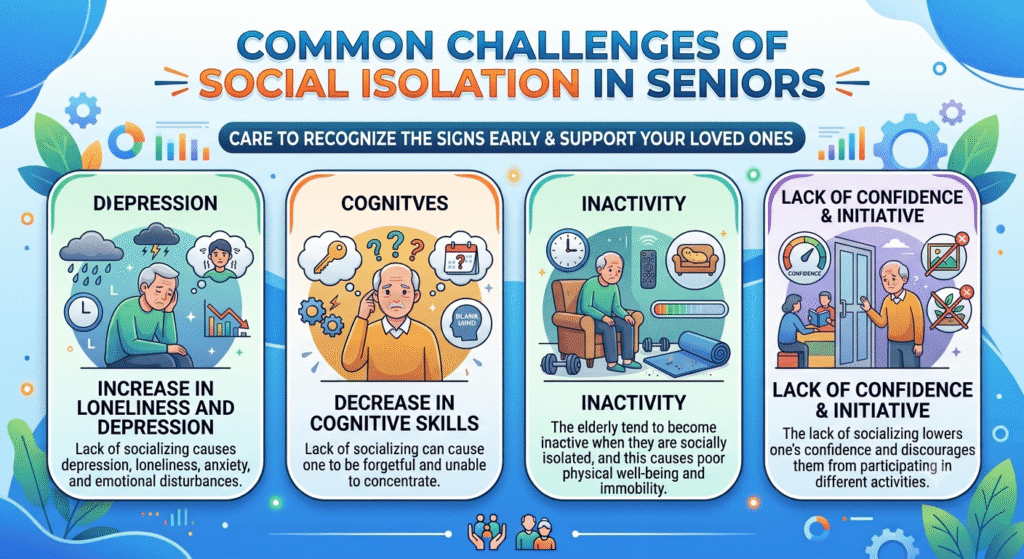
Sustained isolation could have negative effects on the physical and psychological health of the senior individual, thus reducing the overall quality of their life. Since a senior is unlikely to spend sufficient time with his family, friends, and community members, they will be at a high risk of suffering from various issues, both physically and mentally.
- Increase in Loneliness and Depression: Lack of socializing causes depression, loneliness, anxiety, and emotional disturbances.
- Decrease in Cognitive Skills: Lack of socializing can cause one to be forgetful and unable to concentrate.
- Inactivity: The elderly tend to become inactive when they are socially isolated, and this causes poor physical well-being and immobility.
- Lack of Confidence and Initiative: The lack of socializing lowers one’s confidence and discourages them from participating in different activities.
It is important to prevent social isolation among seniors in order for them to maintain good health and well-being.
Types of Social Activities in Assisted Living Communities
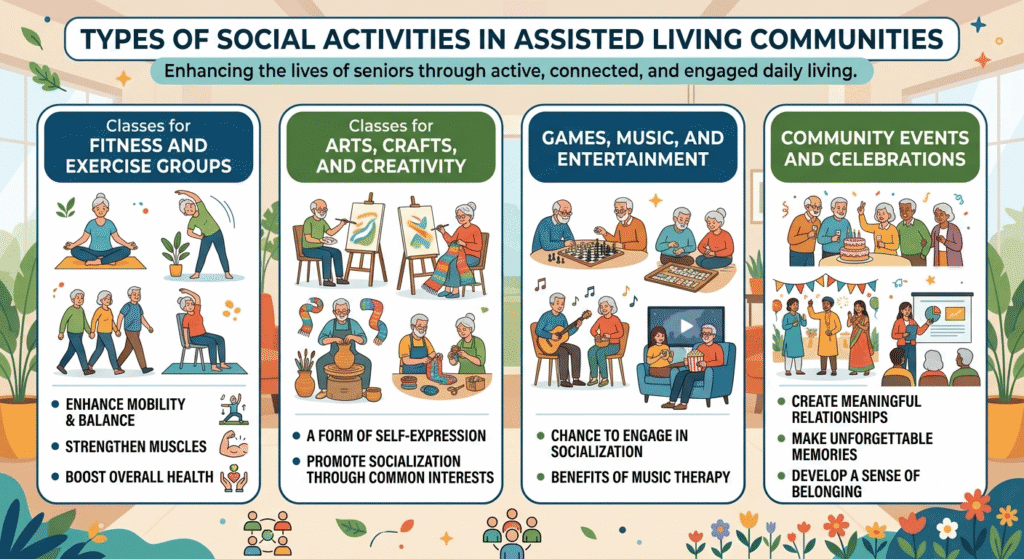
Assisted living communities offer a variety of social activities for seniors that encourage seniors to stay active, connected, and engaged in daily life.
Classes for Fitness and Exercise Groups
Elderly people get up and engage in senior engagement activities together in groups such as yoga, stretching, walking groups, and seated exercises to enhance mobility, balance, muscles, and overall health of their body.
Classes for Arts, Crafts, and Creativity
These social activities for seniors include creative activities engaged in by the elderly including painting, knitting, pottery, and crafting that act as a form of self-expression and also promote socialization through common interest.
Games, Music, and Entertainment
Seniors will have the chance to engage in socialisation by playing board games, receiving the benefits of music therapy, attending movie nights, etc.
Community Events and Celebrations
Events like holidays, cultural festivals, birthday parties, and awareness talks are some of the good ways of creating meaningful relationships, making unforgettable memories, and developing a sense of belonging.
Participating in diverse social activities for seniors helps them to maintain independence, improve wellbeing, and enjoy a more active, connected lifestyle.
How Group Activities Improve Physical and Mental Wellbeing
Elderly people will experience improved states of both their physical and psychological wellbeing by engaging in collective exercises. Joining in the exercise programs, walking, dancing, or yoga classes is an excellent means of muscle building and remaining mobile and balanced so as to avoid any accidental falls. Apart from that, it is always a good practice for the elderly to avoid developing chronic conditions such as arthritis, diabetes, and hypertension.
Additionally participating in joint activities promotes speaking, listening, and developing thoughts. Through these, the brain is kept in active working mode, resulting in enhanced memory ability and better concentration. Brain stimulating activities like craft workshops, games, music, and educational activities help to combat loneliness while reducing feelings of isolation. On the emotional level, one who regularly participates in such activities becomes more confident, happier, and less prone to feeling anxious or being depressed.
If seniors find themselves with activities that they both enjoy and can share with others, they can gain more confidence. They can make new friends, preserve purpose, happiness, and good physical condition. The shared experiences lead to a greater measure of independence and a better overall life.
The Role of Social Connections in Reducing Loneliness and Depression
Social interaction among the elders helps in alleviating loneliness, which is closely tied to depression. Seniors who spend time talking with others, taking part in activities, or have a deep friendship, get some kind of emotional support and feel less sense of loneliness.
In fact, being around others can really lift someone up and help a person reduce stress and even get stronger in self-esteem.
It also makes the elderly persons active and engaged; it gives them a better mental health level and develops more resilience to emotions.
How Assisted Living Encourages an Active and Engaging Lifestyle
Supported living communities provide opportunities for older adults to maintain an active lifestyle as well as their social and cognitive well-being as they balance their lives with a daily schedule and a living environment that acknowledges their individual needs.
- Recreational Activities for Routine Engagement: This refers to physical activities, games, leisure activities, and health programs which make sure that seniors remain physically active and independent.
- Social Engagement with Purpose: The social activities which seniors participate in groups, such as eating and socializing events, can make them develop friendships and overcome their feeling of loneliness.
- Learning and Creative Opportunities: The learning programs involve art, music, courses, and skills which help to improve cognitive abilities development of seniors.
- A Comfortable Environment: The professionals will make sure that seniors enjoy the various activities in a safe and comfortable environment.
An active and engaging lifestyle helps seniors to enjoy better physical health, stronger social connections, and improved overall wellbeing.
How Redle Care Creates Meaningful Social Experiences for Seniors
At Redle Care, senior citizens can participate in various planned social events and programs that help to create an active, warm atmosphere where new friendships can develop.
Besides the social events organized by the management, the residents are offered a wide array of activities like group exercises, celebrations of culture through events, workshops for the artistic people, games, and community-based gatherings, which all provide a great opportunity for interaction and getting involved.
Senior citizens benefit from these assisted living activities in many ways including improving their mood, overcoming loneliness, and getting connected to the community which results in a stronger bond.
Conclusion
Social interaction is very crucial when it comes to ensuring that the elderly remain active, engaged, and mentally healthy. It is through assisted living community benefits that this has been made possible.
With carefully designed social programs and services, you can be assured that your loved ones enjoy a good life and at the same time give you peace of mind.
FAQs
1. Why are social activities important for seniors?
Engaging in social activities not only boosts emotional and mental health but also sharpens mind functions, promotes physical exercise, reduces isolation and helps seniors keep strong relationships and feel confident.
2. How does assisted living reduce loneliness?
Senior wellbeing in assisted living promotes social interaction on a daily basis through group meals, group activities, community events, and company, allowing seniors to forge enduring relationships.
3. What activities are available in assisted living communities?
Residents participate in exercise sessions, games, arts and crafts, musical sessions, gardening, celebrations, educational programs, and organized trips as activities.
4. Can social interaction improve seniors’ mental health?
Yes, consistent socialization helps reduce stress, anxiety, and depression while enhancing mood, memory, confidence, and overall emotional wellness of seniors.
5. How does Redle Care keep seniors socially engaged?
Redle Care has set a schedule that includes both planned and properly elderly social activities, group-based events and wellness sessions, and community bonding, which not only lead to friendship but also a sense of participation and fun living for the elderly.