

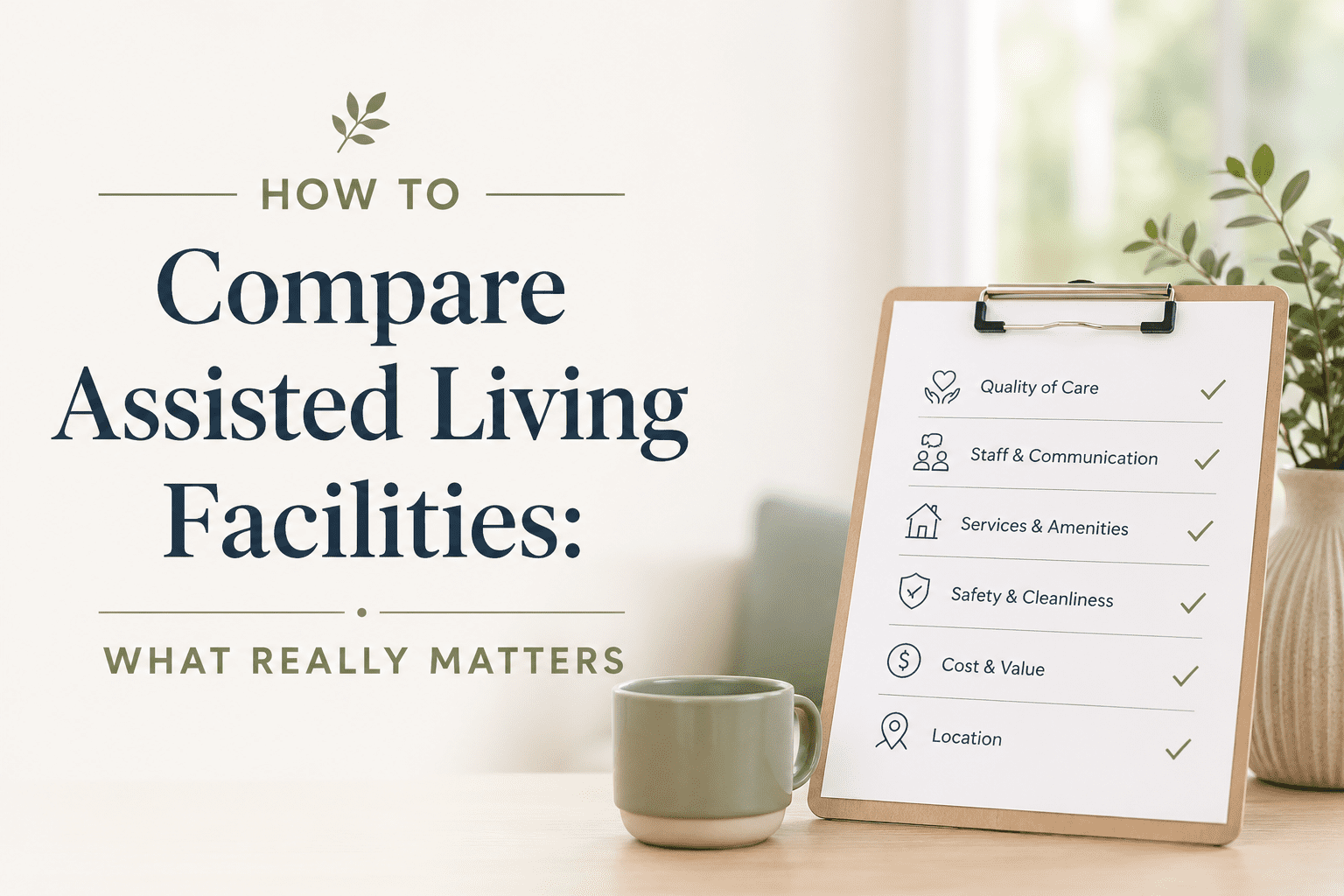
Deciding where your aging loved one should live isn’t just another item on your to-do list; it’s a big moment, and honestly, it’s stressful. You’re not just looking for a place with decent meals and a comfortable bed. You want a space that feels safe, where dignity’s respected, and where your family member gets genuine care that feels personal. Most families start off with the same question: How do we actually compare assisted living facilities, and how do we know which one is the right fit?
The tough part? There’s no magic formula.
At first, every facility can start to blend together. They’ll all talk about cozy rooms, social programs, and medical support. Their brochures promise warmth, an active community, and reliable care. But when you dig deeper, the real differences show up in unexpected places. It’s the tiny details that reveal how a place truly takes care of its residents.
Think about it: the quality and attitude of caregivers, how quickly staff respond to calls, the right emergency setups, proper hygiene, customized care plans the stuff that shapes a senior’s daily experience. Add in emotional support programs and honest pricing, and suddenly, that “comparison checklist” feels pretty essential.
In India, families are quickly realizing they need more than a cookie-cutter solution. Cities like Chennai, Bengaluru, Pune, and Hyderabad are packed with new options for senior care at different price points. Urban families are scattered, grown children often live in other cities or countries, so seniors want active, supportive communities that keep them independent, healthy, and safe. But with more options comes more confusion how do you cut through the slick marketing and actually judge care quality?
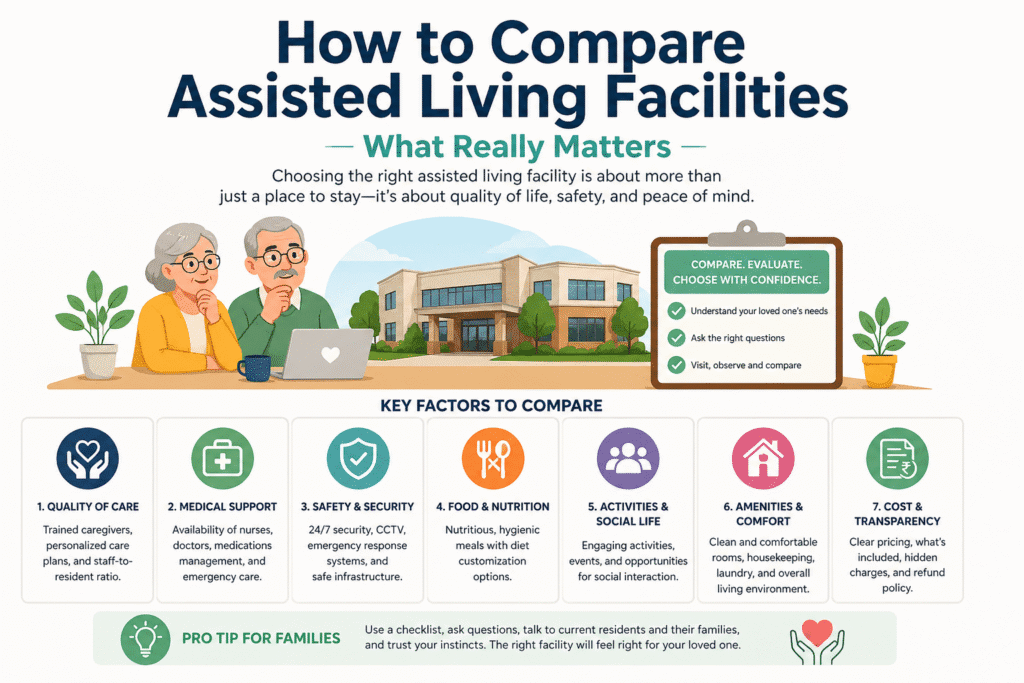
Here’s what matters really matters. When you look at a facility, ask yourself questions about:
- Safety: How secure is the environment? Are there emergency systems?
- Medical help: Is help fast and reliable, day and night?
- Caregivers: Are they attentive, patient, and trained for all situations?
- Cleanliness: Not just shiny floors, but proper hygiene everywhere.
- Food: Is nutrition a priority, and are diets adapted for individual needs?
- Social life: Are there activities that keep residents engaged and happy?
- Care plans: Is there real customization, or one-size-fits-all routines?
- Accessibility: Are spaces easy to move around, safe for seniors with mobility issues?
- Pricing: Are the costs upfront, with no hidden charges?
- Emotional comfort: Is dignity and mental wellbeing as important as physical safety?

These aren’t just boxes to check. They’re the building blocks of a supportive community that makes seniors feel at home.
Cost matters, of course. But, if you end up choosing the cheapest option just because it’s affordable, you risk cutting corners on the stuff that truly matters. What you’re hunting for is value: a balance between reasonable prices and care quality, attentive staff, and a vibrant environment. It’s about getting the most for your money without sacrificing your loved one’s wellbeing.
So if you’re confused by the choices, don’t worry. This isn’t a guessing game. We’ll dig in deeper: how to compare facilities, what to ask during visits, red flags to look for, and how to tell if a place is really up to the mark, beyond the glossy ads.
Because making the right decision isn’t about shiny brochures it’s about evidence, experience, and knowing you can trust the people caring for your family.
Why Families Struggle to Compare
Choosing the right assisted living facility feels a lot like trying to piece together a puzzle, but half the pieces are missing and you’re racing against the clock. Families often find themselves scrambling after a health crisis maybe a fall, a sudden illness, or a moment when it just becomes clear that Mom or Dad isn’t safe on their own anymore. The whole thing is emotionally loaded. You want to do what’s right, but guilt and uncertainty get in the way. There’s a constant voice in your head wondering, “Will they be happy here?” or “Is this really the best choice?” When emotions run high, even simple decisions feel impossible, and comparing facilities turns into a guessing game.
On top of that, there’s a lot of confusion about what “assisted living” actually means. People toss around terms like old-age home, nursing home, retirement community, even sometimes long-term care center so it’s no wonder families walk into tours not knowing what to look for. They might be searching for safety and medical support, but then get shown a fancy gym or a well-lit TV lounge. If you don’t know the difference between assisted living and other options, it’s easy to get distracted by glossy surfaces and miss out on what your loved one really needs.
And let’s talk about those surfaces. On paper, almost every facility seems the same. The websites and brochures all show smiling seniors, tidy bedrooms, big dining halls filled with sunlight. They all promise healthy meals, social events, on-site nurses, and a “homey” feeling. But the things that truly set places apart how quickly staff respond when a resident rings for help, how much personal attention someone gets, whether caregivers have proper training don’t show up in a quick tour or a pretty pamphlet.
You have to look closer. The tiny details matter: how many caregivers work each shift, if staff stick around for years or constantly change, whether emergencies are handled smoothly, if the place feels clean but not sterile, and if residents look genuinely cared for rather than just managed. Often, families don’t realize how much these hidden factors shape daily life until problems start popping up after move-in.
Money is another huge stumbling block. Most people start by comparing obvious costs, like the monthly fees. But those are just the tip of the iceberg. Many facilities keep base rates low and then add surprise charges for things like medication management, physical therapy, transportation, or even simple help with bathing. So families think they’ve found an affordable deal, only to get hit with a stack of add-ons that push the price far beyond what they expected. Without a solid checklist breaking down every potential cost, it’s far too easy to end up comparing apples to oranges.
Plus, within each family, there’s rarely perfect agreement on what matters most. One person fixates on medical care, another insists on affordability, someone else wants a lively social calendar or a nice view, and the senior themselves may be desperate for independence. All these clashing priorities can stretch conversations for weeks. Sometimes they derail things entirely.
Then there’s the uncertainty about the future. Maybe Mom’s pretty independent now, just needs help with a few things. But what if dementia develops, or medical needs grow more complicated? Does the facility have the resources to step up as things change, or will you find yourself searching for a new home all over again? Families want to plan ahead but often don’t know how to judge which places will work both now and later.
That’s if you even know the right questions to ask. People usually focus on the basics How big are the rooms? Is there a nurse at night? but miss harder questions like how emergencies play out in real time, how often doctors actually visit, what the staff turnover’s like, and whether there are surprise fees. The difference between a good and a great facility often hinges on details hidden in these kinds of answers.
And truthfully, most families don’t have a clear system for comparison.
What Actually Matters in Comparison
- Care Quality
Top of the list. Ask how many caregivers there are per resident. Are they well-trained? Is care truly tailored not just generic routines? Someone needs to be available, always day and night.
- Medical Support
Is there a nurse on site 24/7? How easy is it to get doctor consultations? Are ambulances ready for emergencies? Who supervises medication?
- Safety Features
Look for grab bars, wheelchair-friendly access, clean and slip-resistant floors, CCTV in common areas, panic buttons everywhere, and fast emergency response systems.
- Hygiene
Check for cleanliness, odors, well-kept bathrooms, sanitary kitchens, and fresh laundry.
- Emotional Wellbeing
A good place isn’t just about staying alive it’s about feeling alive. Are there activities? Is there real companionship? Is family included in routines?
- Food & Nutrition
Meals need to be balanced, customizable, suited for seniors, and informed by medical advice.
- Cost Transparency
Be clear about fees, medical extras, deposits, emergency costs, and how prices change if care needs escalate.
A Practical Comparison Framework
Build your own checklist, side by side:
- 24/7 staff: Who’s always there?
- Nurse support: Is it constant?
- Emergency response: Is it quick and reliable?
- Cleanliness: Spotless, average, or somewhere in between?
- Activities: Are residents engaged, bored, or just somewhere in the middle?
- Meal customization: Can diets be adjusted for each senior?
- Family communication: How well are you kept in the loop?
- Cost transparency: Hidden fees, surprise expenses, or everything upfront?
| Factor | Facility A | Facility B | Facility C |
| 24/7 Staff | ✓ | ✓ | ✗ |
| Nurse Support | ✓ | ✗ | ✓ |
| Emergency Response | ✓ | ✓ | ✓ |
| Cleanliness | Excellent | Average | Good |
| Activities | High | Low | Medium |
| Meal Customization | ✓ | ✗ | ✓ |
| Family Communication | Excellent | Good | Average |
| Cost Transparency | High | Medium | Low |
That chart helps you compare logically and see past surface-level promises.
Common Mistakes Families Make
Don’t let price be your only guide. Sometimes, cheap places cost more in stress and problems later. Don’t judge just by appearances, either. Gorgeous lobbies mean nothing if caregivers aren’t compassionate.
Watch how staff interact with residents. Are they patient and attentive or just going through the motions? Read the contract. Understand refund rules, escalation charges, and add-ons.
Talk to current residents. They’ll give you the real story way more than the brochure ever could.
Questions to Ask During Visits
- What’s your caregiver-to-resident ratio?
- Is medical support here 24/7?
- How are emergencies handled?
- Are special diets possible?
- What regular activities are offered?
- How do you update families?
- If my parent’s needs change, what happens?
- Any hidden charges?
- What infection control is in place?
- Can I chat with resident families?
The answers tell you everything about daily life, safety, and transparency.
How Redle Care Stands Out
Families want more than professionalism they want warmth, affordability, and real medical assurance. That’s what Redle Care emphasizes.
They tailor support. Staff are compassionate, not robotic. Infrastructure’s designed for safety, with smart monitoring and medical backup. Residents get real companionship and enriching activities. Pricing is transparent. They don’t cut corners for the sake of affordability. You get hospitality and genuine elder care the kind of community that’s worth a closer look if you live in Chennai or anywhere else.
Conclusion
Picking the right assisted living facility isn’t just another task to cross off the list it’s a deeply meaningful decision that really shapes the day-to-day life and happiness of your loved one. It’s not only about finding a roof over their head; you’re choosing a place that can impact their comfort, wellbeing, and sense of security for years ahead. That’s why it matters to slow down, ask questions, and look beyond the basics. Don’t just settle for what’s close by or the first option you see online dig a little deeper and truly compare what’s out there.
A great assisted living community does more than provide meals and a clean room. The best ones give your loved one dignity and room for independence, with staff who actually care not just for their needs, but for them as people. Seniors thrive when they feel heard, safe, respected, and part of a real community. You can’t always spot this in a glossy brochure or a quick tour. You’ve got to pay attention to the small details: How do the staff interact with residents? Is help there when it’s actually needed? What does a normal day feel like? What happens in an emergency, and how open are they about costs? Are there activities and chances for friendships, or does it just feel like another institution?
Every family’s situation is a little different, too. Some seniors love joining in activities and being at the heart of things; others might be more comfortable with quiet routines or need a facility that understands specific medical needs. There’s no one-size-fits-all, and that’s okay. You have to start with what your loved one truly wants and needs not what looks good on a flyer or what’s popular.
A good assisted living home should do more than meet basic physical needs. It should encourage independence, offer help when it’s needed, and give your loved one something to look forward to each day a home, not just a place to live. Whether you’re looking at communities in Chennai or exploring all around India, investing a little more effort upfront leads to a lot more comfort down the road. Don’t rush the search. Ask plenty of questions especially the tough ones. Bring your loved one into the process as much as possible, because in the end, they’re the one who will call it home.
FAQs
How can I compare different assisted living facilities?
Make a checklist. Focus on care quality, medical backup, hygiene, safety, social life, staff quality, and open pricing.
Which factors matter most?
Prioritize care quality, safety, emergency response, compassion from staff, and personal support plans.
Is cost the main consideration?
No value is what you need. Low prices with weak care cause bigger headaches down the road.
What should I ask when visiting?
Ask about staff ratios, medical support, how emergencies are handled, meal options, activities, pricing, and what happens if care needs change.
How do I know which place is right for my parents?
Find a facility that matches their health, personality, comfort preferences, and long-term needs. It’s all about fit not just features.